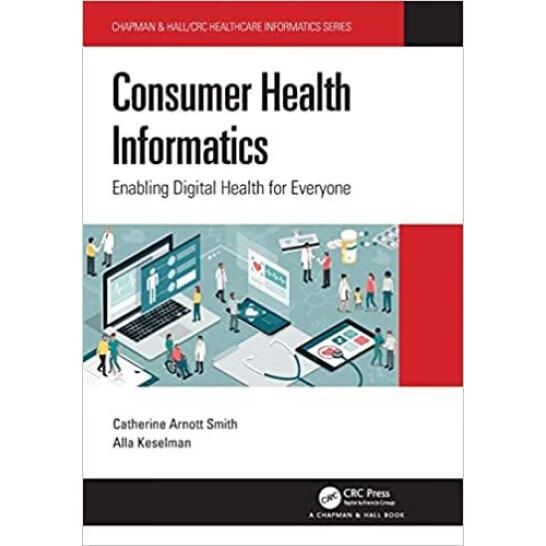
【书名】Consumer Health Informatics: Enabling Digital Health for Everyone
【作者】Catherine Arnott Smith, Alla Keselman
【出版年份】2020
【出版社】New York: CRC Press
【ISBN号】9780429442377
【内容简介】
本书面向那些希望设计或推广信息技术的人,帮助人们在医疗保健中更加积极和知情。主题包括患者门户网站、可穿戴设备、应用程序、网站、智能家居和专注于健康的在线社区。本书为教育读者了解消费者健康信息学的核心概念:参与式医疗保健;健康和电子健康素养;以用户为中心的设计;信息检索和可信信息资源;以及健康信息和通信技术的伦理层面。它介绍了消费者健康信息学领域的知识现状和最新发展。讨论涉及为关键用户群体量身定制信息,包括患者、消费者、护理人员、父母、儿童和年轻人以及老年人。例如,应用程序不仅被认为是一种丰富的消费技术,有望实现强大的个人数据管理,并与社区和医疗保健提供商建立联系,而且也是一个充满对有效性、隐私和安全性担忧的领域,要求设计者和用户围绕自己的选择进行批判性思考。本书对该领域的独特贡献在于,它关注的是消费者和患者在临床环境之外的日常生活。对工具和技术的讨论基于这一观点,并基于现实世界的使用及其对设计的影响。强调通过参与式和以人为中心的护理来增强权能。
This is a book for people who want to design or promote information technology that helps people be more active and informed participants in their healthcare. Topics include patient portals, wearable devices, apps, websites, smart homes, and online communities focused on health. It educates readers in the core concepts of consumer health informatics: participatory healthcare; health and e-health literacy; user-centered design; information retrieval and trusted information resources; and the ethical dimensions of health information and communication technologies. It presents the current state of knowledge and recent developments in the field of consumer health informatics. The discussions address tailoring information to key user groups, including patients, consumers, caregivers, parents, children and young adults, and older adults. For example, apps are considered as not just a rich consumer technology with the promise of empowered personal data management and connectedness to community and healthcare providers, but also a domain rife with concerns for effectiveness, privacy, and security, requiring both designer and user to engage in critical thinking around their choices. This book’s unique contribution to the field is its focus on the consumer and patient in the context of their everyday life outside the clinical setting. Discussion of tools and technologies is grounded in this perspective and in a context of real-world use and its implications for design. There is an emphasis on empowerment through participatory and people-centered care.